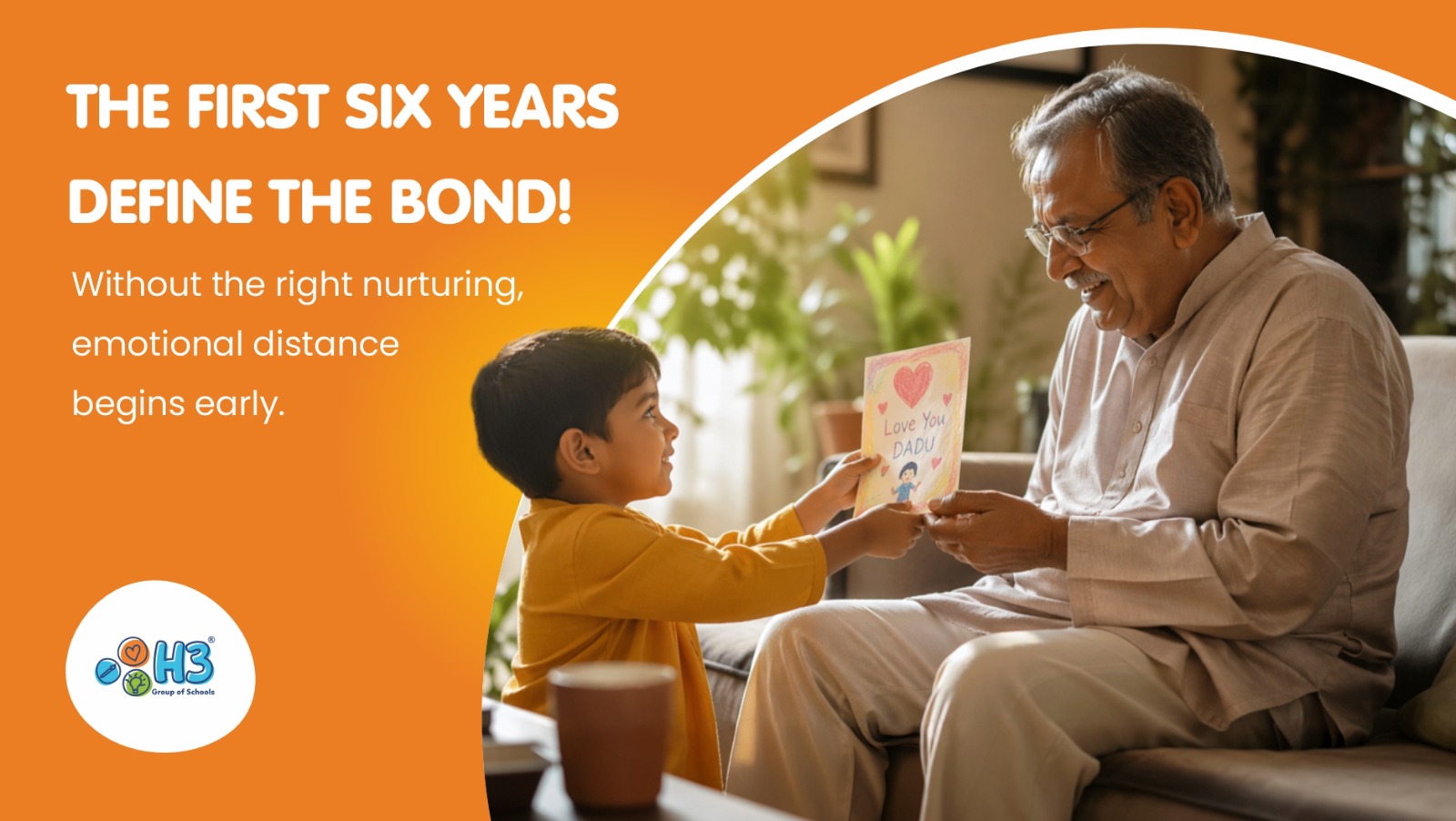
Why do children begin to see their parents merely as providers?
The First Six Years: Where Values Begin and Relationships Are Shaped. Many parents, at some point, find themselves asking a difficult question—why do children begin to see their parents merely as providers? Over time, this emotional distance can quietly grow, often leaving parents hurt and wondering what went wrong.
The answer, more often than not, lies in the earliest years of a child’s life.
The first six years are not just about learning to speak, read, or write. They are the foundation years where values, emotional connections, and a sense of belonging are formed. Whether a child grows up with gratitude, empathy, and respect, or with detachment and indifference, largely depends on what they experience during this crucial phase.
Today, what seems to be missing is not intelligence or exposure, but the deeper human values. Living in alignment with nature, staying rooted in one’s culture, practicing gratitude, and understanding relationships are lessons that often take a backseat in a fast-moving, distraction-filled world. Life, in its essence, is simple, but distractions make it complicated, and somewhere along the journey, we lose sight of purpose.
At H3, this understanding forms the core of everything we do.
With over 30 years of experience, H3 has refined its approach by returning to the basics—the roots that truly matter. The philosophy is built around a powerful yet simple concept: Hands, Heart, and Head.
This approach focuses on creating a balance between action, emotion, and intellect. It moves beyond traditional methods that emphasize only reading, writing, and arithmetic, and instead nurtures a child in a more complete and meaningful way.
Hands represent implementation—learning by doing.
Heart represents inspiration—developing empathy, kindness, and emotional intelligence.
Head represents information—building knowledge and understanding.
Together, these three pillars create a holistic framework that is especially relevant for the alpha generation, helping children grow into well-rounded individuals.
What truly sets H3 apart is its attention to the small yet impactful details that shape a child’s mindset from an early age.
Initiatives like Tiny Tummies guide parents with nutritional recipes, ensuring children receive the right energy while avoiding lifestyle-related issues such as obesity. Activities such as creating birthday cards for parents and grandparents encourage children to express gratitude and respect in a personal and meaningful way.
Frequent field visits and interactions with social workers expose children to different walks of life. By understanding the efforts of delivery personnel, vegetable vendors, and cleaners, children develop empathy and remain grounded in reality.
Each of these experiences may seem small, but together they create a strong emotional and ethical foundation. H3 ensures that every aspect of a child’s early years contributes to making their childhood not just enjoyable, but also meaningful and memorable.
Because in the end, education is not only about what a child knows—it is about who they become.
Parents who wish to experience this approach can visit any nearby H3 Preschool and enroll their child for a five-day demo class. It is an opportunity to witness firsthand how the right foundation can shape not just a child’s future, but also their relationships for life.